
Emergency Water Mitigation That Starts With Facts, Not Guesses
The first response after a leak or burst pipe determines how much of your home ends up in the final scope. We move fast, but we still measure before we act.
Email Us for a Free Estimate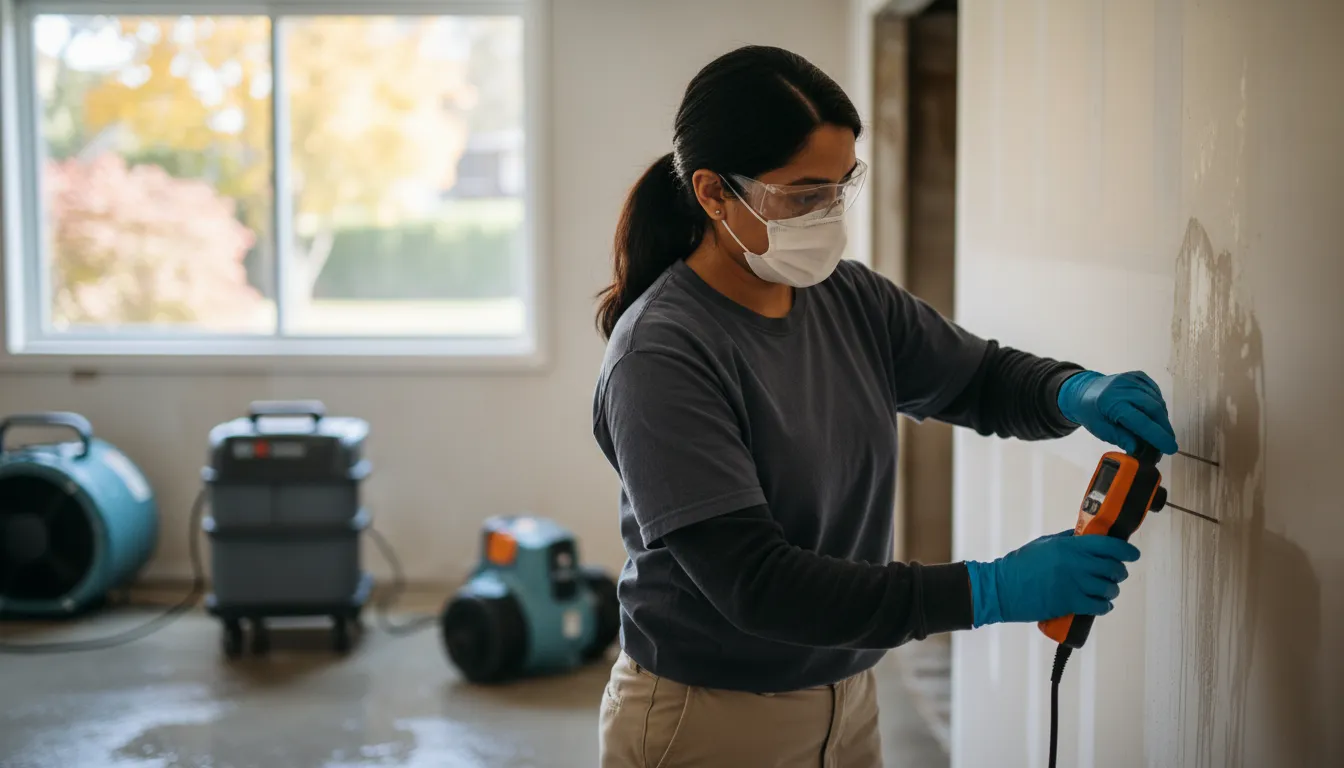
What emergency mitigation actually covers
Mitigation is everything that happens between 'water is loose in the house' and 'the source is controlled and containment is in place.' It's the phase most homeowners have never had to think about, and it's also the phase where a rushed or careless crew turns a manageable job into a much bigger one.
Source control comes first
We stop the water — whether it's a burst supply line, a failed sump, or roof intrusion from a storm — before anything else. A dried floor means nothing if the source is still leaking behind a wall.
Containment prevents cross-contamination
Barriers and air management keep water and airborne moisture from spreading into rooms that weren't originally affected, which matters a lot in older Mississauga homes with shared HVAC returns.
We document as we go
Photos, moisture readings, and timestamps get logged from the first minute on-site, because this becomes the backbone of your insurance claim later.
Speed only matters if it's accurate
A fast response that misses moisture behind the baseboard isn't actually fast — it just delays the real scope by a few days and adds mould risk in the meantime.
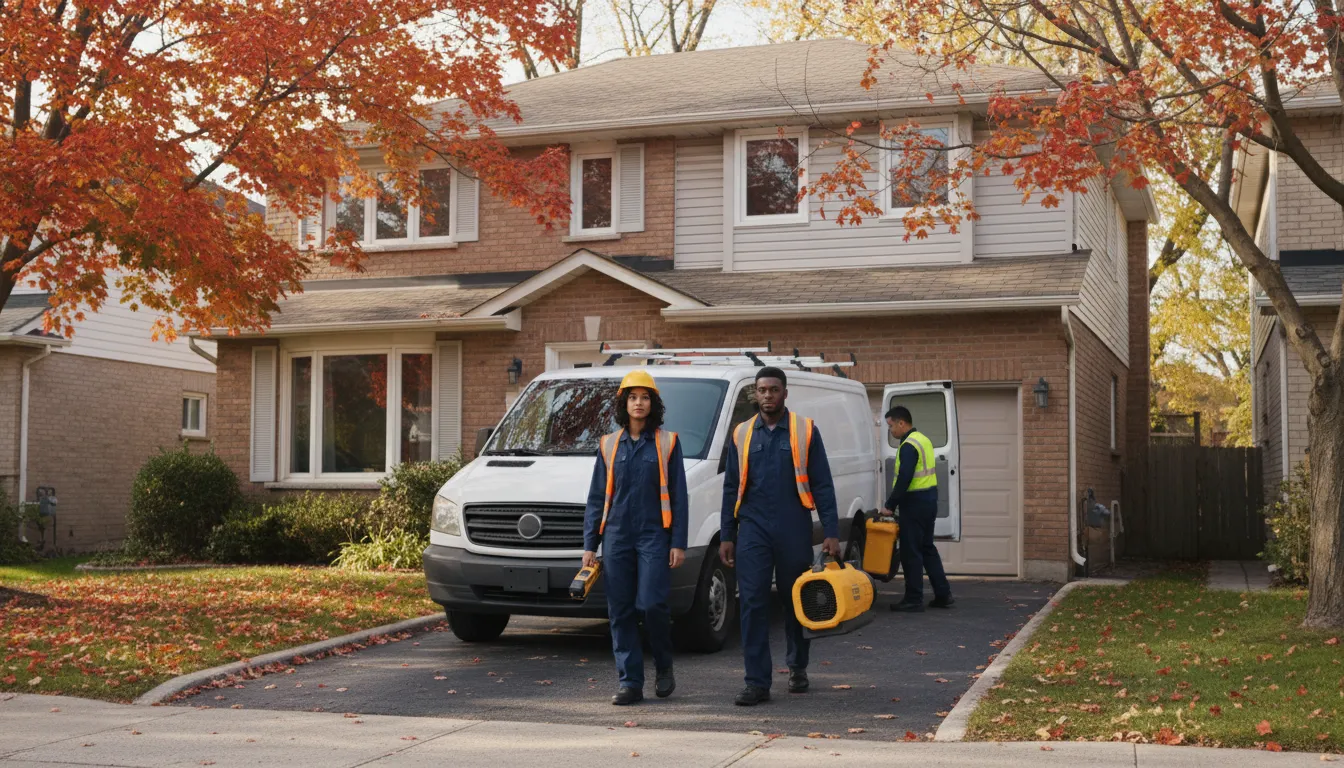
"We'll send someone right away" and then nothing gets measured
A common complaint we hear secondhand: a crew shows up fast, runs a shop vac, sets a couple of fans, and leaves — with no moisture readings taken and no written scope. It feels responsive in the moment, but without measurements there's no way to know if the structure is actually drying or just evaporating on the surface while the stud cavity stays wet.
Speed and documentation aren't a tradeoff
Our mitigation response includes moisture mapping from the first visit — not after the fact. That means the equipment we place is based on actual readings, and the scope we hand you (and your insurer, if needed) reflects the real extent of the water intrusion, not a visual guess made from the doorway.
Our emergency mitigation sequence
Four stages, each one verified before we move to the next.
- 1
Source identification
We find and stop the active water source before treating symptoms.
- 2
Moisture mapping
Meters check floors, walls, and subfloor to establish the real extent of intrusion.
- 3
Extraction and containment
Standing water is removed and barriers go up to stop the spread to unaffected areas.
- 4
Scoped handoff
You receive a written summary of what was found and what happens next, before any long-term drying equipment is committed.
Why our mitigation response holds up under scrutiny
This is the phase insurers look at most closely — it needs to be right.
Meter-first response
No equipment gets placed without a moisture reading justifying it.
Licensed & insured
Mitigation work is performed to code, every time.
Fast prioritization
Active water events jump the queue because time changes the scope.
Documentation from minute one
Photos and logs start at arrival, not after the fact.
GTA housing familiarity
We adjust technique for older plaster walls versus newer drywall assemblies.
No inflated equipment counts
We place what the readings justify, not what fills a truck.
Emergency mitigation questions
How quickly should mitigation start after a leak?
As soon as possible — water travels along subfloor and wicks into drywall within hours, not days. Email us the details and we'll give you a realistic response window for your area.
Will mitigation stop mould from forming?
Fast, accurate mitigation significantly reduces mould risk by removing standing water and drying the structure before organic growth has time to establish. It's not a guarantee against every scenario, but it's the single biggest factor within anyone's control.
Do you take photos for my insurance claim during mitigation?
Yes, documentation starts the moment we arrive, because mitigation-stage evidence is often what determines how smoothly the rest of a claim moves.
What's the difference between mitigation and full restoration?
Mitigation stops the immediate damage and gets moisture under control. Restoration is the rebuild work — drywall, flooring, trim — that follows once the structure has been verified dry.
Can mitigation be handled without ripping out drywall?
Sometimes. It depends on how deep the moisture has travelled, which is exactly why we meter before deciding — some walls dry in place, others need material removed to prevent trapped moisture.
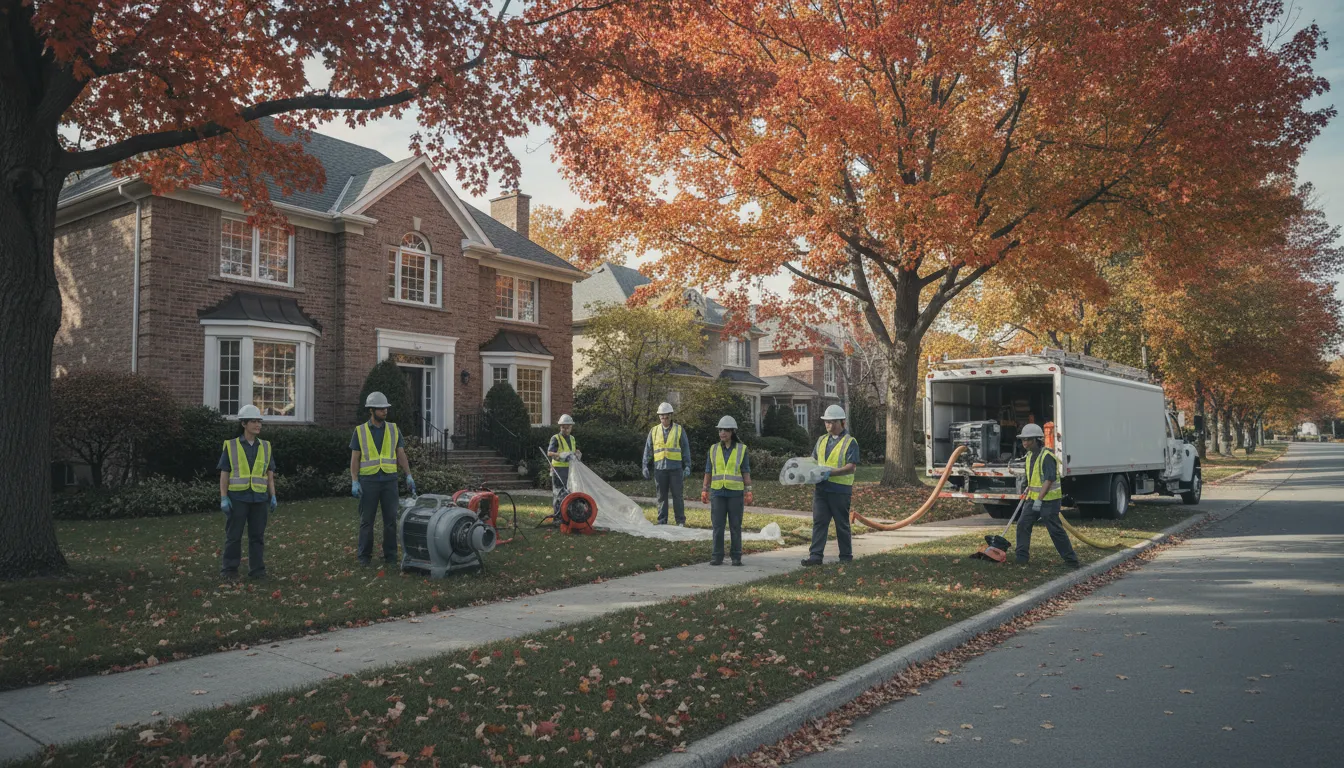
Water moving fast? So can we — but we'll still measure first.
Email us your situation for a rapid, honestly scoped mitigation response.
Email Us for a Free EstimateWeather drives water-damage risk — email us if you find water.
Fall water-damage conditions in Mississauga, ON
Fall rain around Mississauga, ON tests gutters, sump pumps, and foundations; catching leaks and seepage early prevents the slow water damage and mold that surface over winter.
Proudly Serving Mississauga, ON
Local, on-time service throughout Mississauga and the surrounding area.