
Sewage Cleanup, Scoped for What Contamination Actually Requires
Backflow and sewage intrusion aren't just a bigger flood — they're a different category of job with different safety requirements. We price it that way, and we explain why.
Email Us for a Free Estimate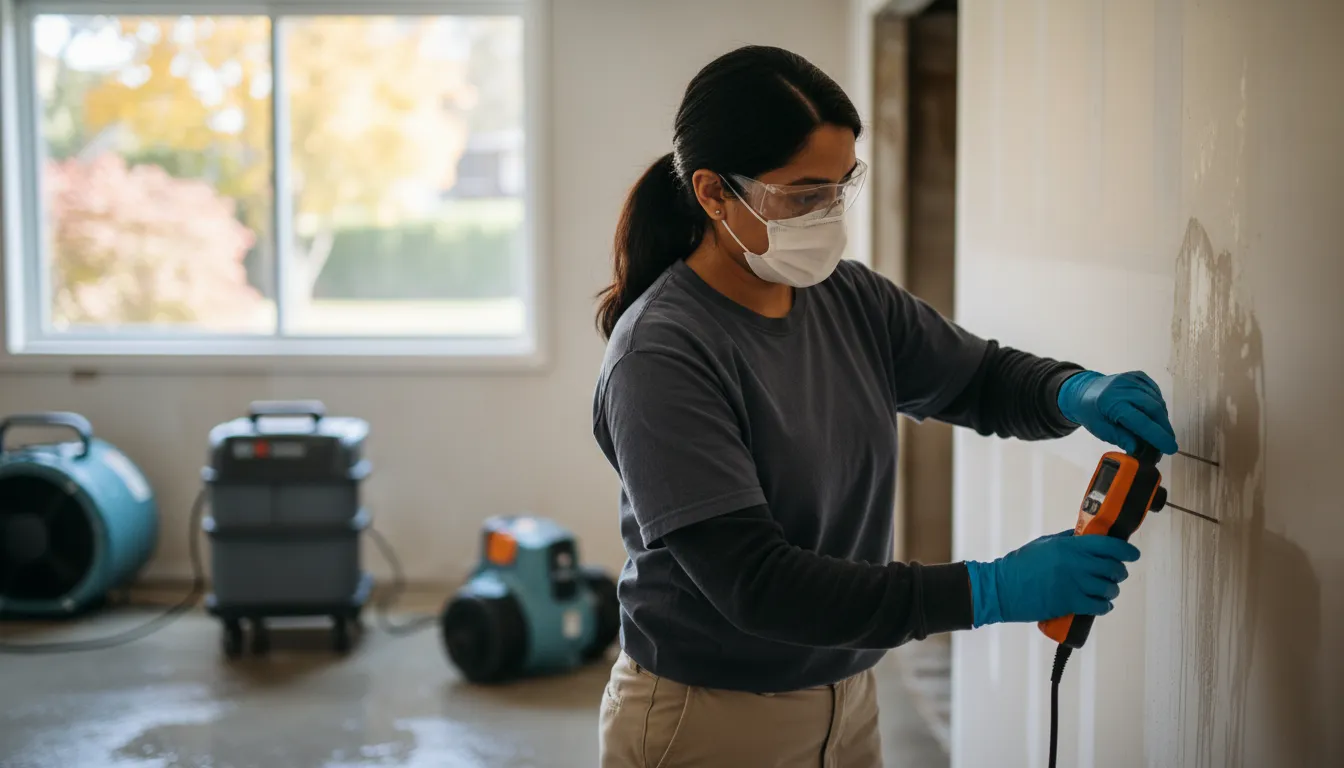
Why sewage cleanup costs more than a regular flood — and what that money actually buys
This is one of the most misunderstood line items in water damage. A backflow or sewage backup is classified as contaminated water, which means porous materials it touches — carpet, underlay, some drywall, insulation — generally can't be dried and saved the way they could after a clean-water flood. That's not upselling; it's a health and safety standard, and it changes the entire scope.
Porous materials usually can't be salvaged
Carpet, underlay, and insulation that contact sewage typically need to be removed and disposed of, not dried in place — this is a safety standard, not a sales decision.
Older sanitary lines in this region back up more often
Many Mississauga and Peel homes built before the 1980s have clay or cast iron sanitary lines that are prone to root intrusion and blockages, especially during heavy rain events.
Disinfection is a distinct step from drying
Drying alone doesn't neutralize contamination. Affected surfaces need to be cleaned and treated with appropriate disinfectant before the space is considered safe.
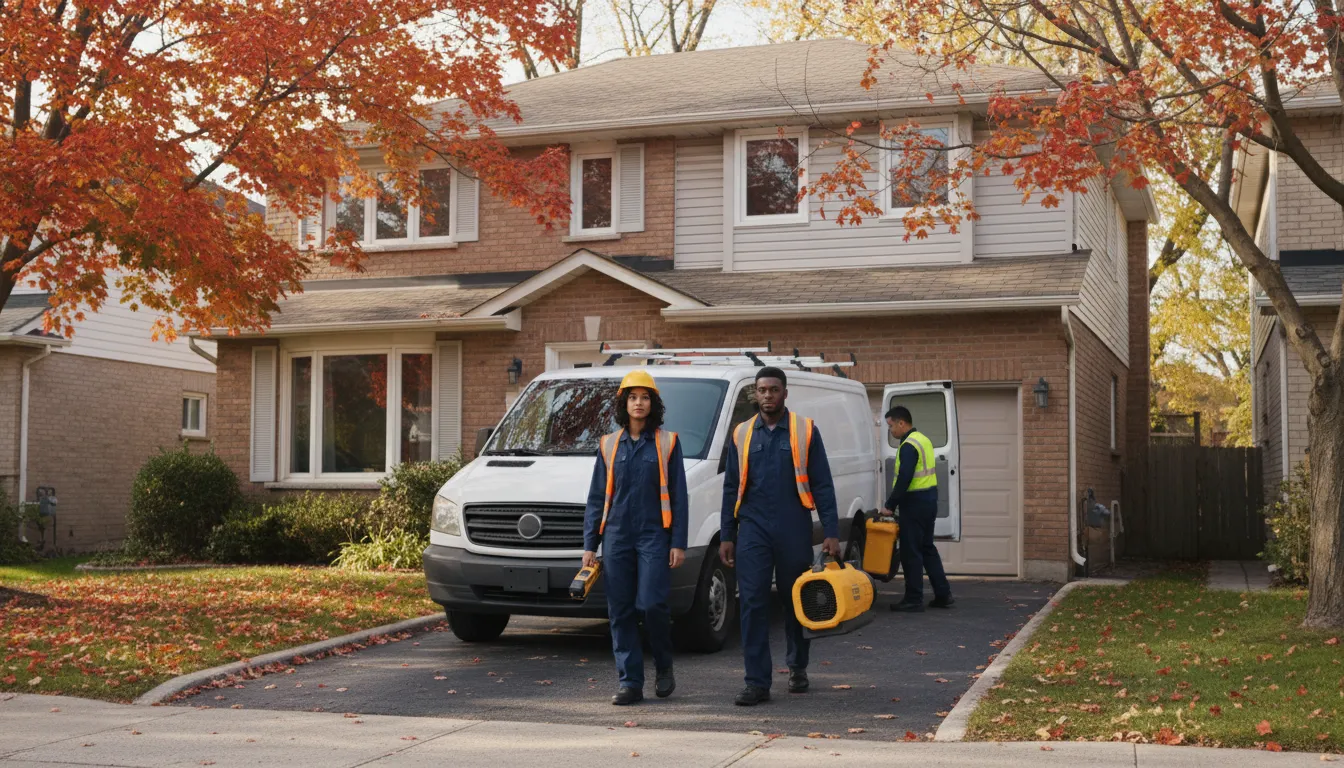
PPE and containment add real cost
Crews handling sewage-contaminated material work in protective equipment and under containment to prevent cross-contamination — that labour is part of an honest quote, not padding.
A quote that treats sewage like a regular water flood
We've seen quotes that price sewage backup cleanup at the same rate as a clean-water flood, with plans to dry the carpet instead of remove it. That's a corner cut on health and safety, not a discount. Contaminated water carries pathogens that a dehumidifier doesn't remove, and drying it in place just traps the contamination under a rug that still looks fine on the surface.
What a properly scoped sewage job includes
Our quote separates disposal of contaminated porous materials, disinfection of salvageable surfaces, and structural drying as distinct line items — because they're distinct processes with distinct costs. You'll see why carpet is being removed instead of cleaned, and you'll see the disinfection step listed separately from the drying step.
How we handle a sewage cleanup job
Five stages, each with its own safety standard.
- 1
Containment setup
Barriers go up immediately to stop contamination from spreading to unaffected rooms.
- 2
Contaminated material removal
Porous materials that can't be safely disinfected are removed and disposed of per protocol.
- 3
Disinfection
Salvageable surfaces are cleaned and treated with appropriate disinfectant before drying begins.
- 4
Structural drying
Monitored dehumidification confirms the structure itself returns to a safe moisture level.
- 5
Final verification
We re-check the space and document the process for your insurer before calling the job complete.
Why our sewage cleanup protocol holds a higher bar
This job category has real health implications — we don't shortcut it.
Biohazard-trained crews
Technicians are trained specifically for contaminated water handling.
Category-3 protocol, every time
We don't downgrade sewage jobs to save time or cost.
Fast containment response
Contamination spread is limited by acting quickly on arrival.
Disinfection documented separately
You can see exactly what was treated and how.
Familiar with regional sanitary line issues
We understand why older GTA sewer lines back up more often.
No unnecessary demo
Only contaminated materials are removed — nothing else.
Sewage cleanup questions
Why can't you just dry and clean my carpet instead of removing it?
Carpet and underlay that contact sewage absorb contamination deep into the fibres and backing, which drying and surface cleaning can't fully address. It's a safety standard across the restoration industry, not a decision we make to sell more work.
Is sewage cleanup covered by home insurance?
Many policies cover sewage backup, sometimes under a specific rider. We can't speak for your policy, but we document the incident thoroughly so you have what you need to ask your insurer directly.
What causes sewage backups in this area?
Aging sanitary lines, tree root intrusion, and municipal system overload during heavy storms are common causes across older Mississauga and Peel Region neighbourhoods. We can flag likely contributing factors during our assessment.
Is it safe to stay in the house during sewage cleanup?
It depends on the extent and location of contamination. We'll tell you plainly whether the affected area needs to be sealed off and whether ventilation or air quality measures are needed during the job.
How long does sewage cleanup typically take?
It varies with how much material needs removal and how far contamination travelled. We give you a realistic timeline once containment and assessment are complete, not before.
Sewage backup isn't a job to cut corners on
Email us the details and we'll explain exactly what proper containment and disinfection will involve.
Email Us for a Free EstimateWeather drives water-damage risk — email us if you find water.
Fall water-damage conditions in Mississauga, ON
Fall rain around Mississauga, ON tests gutters, sump pumps, and foundations; catching leaks and seepage early prevents the slow water damage and mold that surface over winter.
Proudly Serving Mississauga, ON
Local, on-time service throughout Mississauga and the surrounding area.