
Flood Cleanup Scoped on What's Actually Wet — Not a Flat-Rate Guess
Basement floods in this region rarely stay contained to one room. We check the full extent before we quote, so nothing gets missed and nothing gets padded.
Email Us for a Free Estimate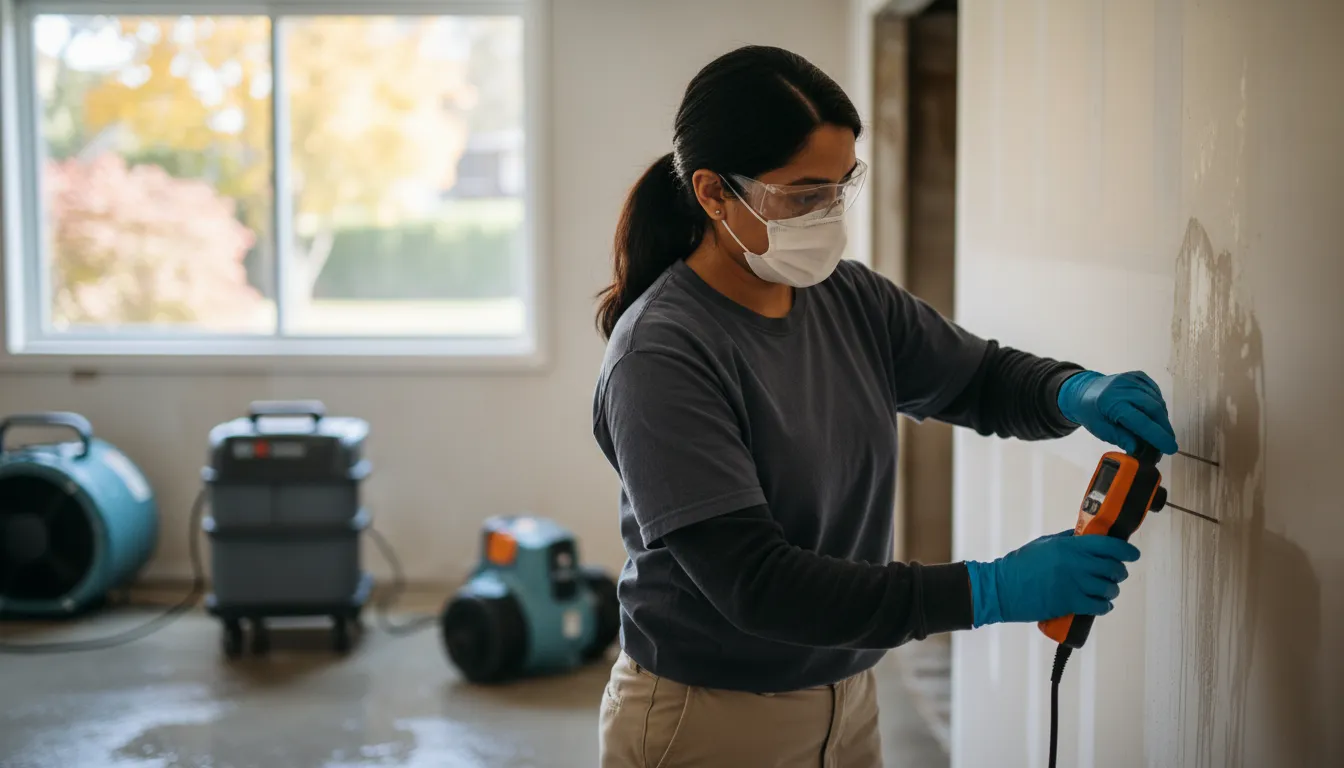
Flood cleanup in a region built on clay soil and aging weeping tile
A lot of Mississauga and Peel Region basements sit on clay-heavy soil that holds water against foundation walls long after a storm passes. Combine that with weeping tile systems that are 30, 40, sometimes 50 years old, and a spring thaw or a summer downpour can push water into a basement that's never flooded before. Cleanup has to account for that groundwater pressure, not just the water sitting on the floor.
We check what's behind the flooring, not just on top of it
Laminate and carpet can look salvageable from above while the underlay and subfloor stay saturated. We pull a section to check before deciding what comes out.
Contents get triaged, not written off automatically
Furniture and belongings are assessed individually — some can be cleaned and dried, some can't. A cheap quote often assumes everything is a write-off because it's faster to bill that way.
Sump and weeping tile condition gets flagged
If the flood traces back to an aging or undersized sump system, we tell you — because cleanup without addressing the source just means doing this again next season.
Freeze-thaw flooding needs a different drying pace
A basement flooded during a winter thaw has cold-soaked concrete, which dries slower than a summer storm flood. We price drying time for the actual season, not an average.
The flat-rate flood cleanup that doesn't check the corners
A flat per-square-foot flood cleanup rate sounds simple, but it usually means one thing: the crew isn't checking whether water travelled further than the visible waterline. In finished basements, water can wick two to three feet up drywall from underneath while the surface looks dry at a glance. A flat-rate job that skips the meter check leaves that moisture in place.
Our approach: measure the waterline, then measure again
We check moisture levels at multiple heights on every wall, not just where the water appeared to stop. If drywall needs to come out at 24 inches instead of 12, that's based on a reading we can show you, and it's in the written scope before demo starts — not added afterward as a surprise line item.
Our flood cleanup process
Five steps from first walkthrough to final sign-off.
- 1
Full-property walkthrough
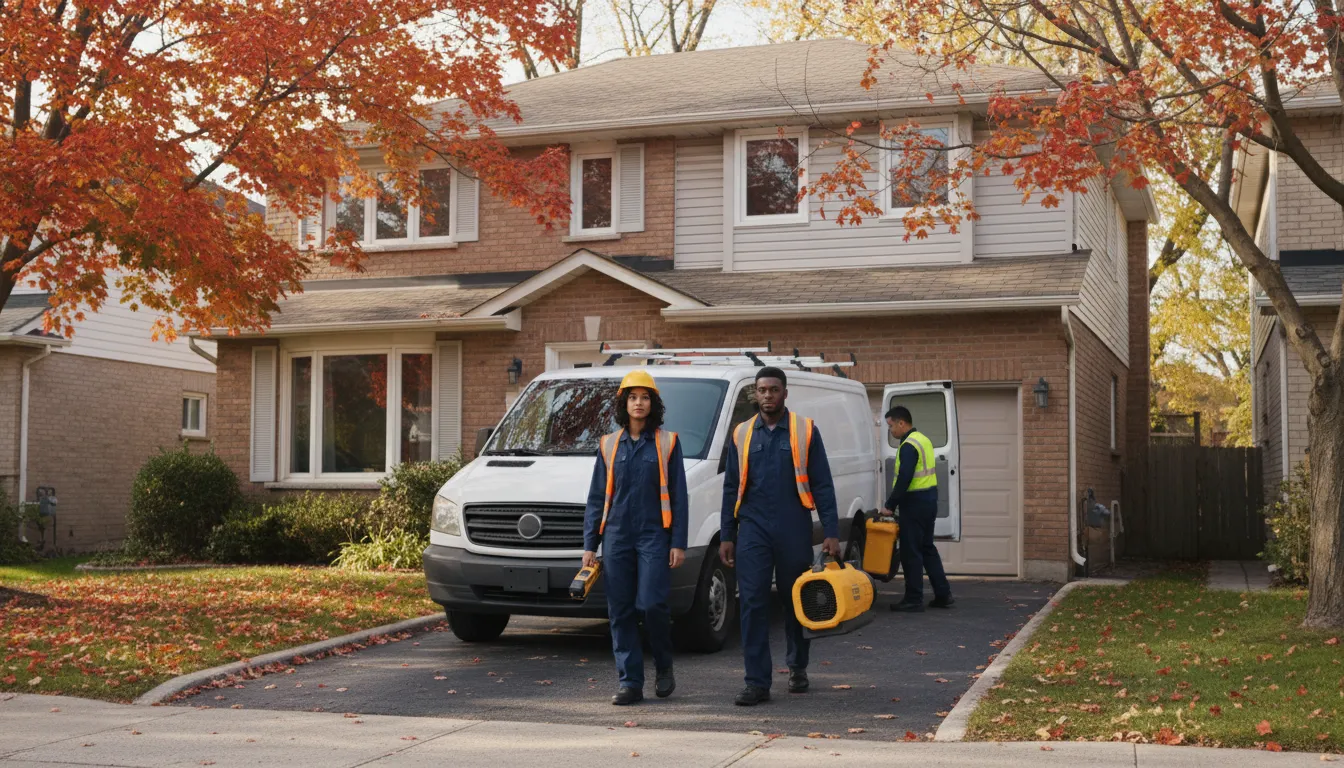
We check every room touched by water, not just the one that was reported.
- 2
Moisture mapping
Readings at multiple wall heights determine exactly how far the water travelled.
- 3
Extraction and debris removal
Standing water, damaged flooring, and unsalvageable material are removed based on those readings.
- 4
Sanitizing and structural drying
Affected surfaces are treated and monitored dehumidification begins.
- 5
Verification walkthrough
We re-check moisture levels before calling the space dry and hand over documentation for your records.
Why our flood cleanup scope holds up
This is the stage where scope creep usually starts — we build the accurate number upfront instead.
Multi-height moisture checks
We measure the true extent of water travel, not just the visible waterline.
Licensed & insured
Crews certified for flood-affected material handling.
Fast scheduling for active floods
Standing water gets prioritized because delay changes the scope.
Contents triage, not blanket write-offs
We assess belongings individually before recommending disposal.
Familiar with regional soil and drainage issues
We flag sump and weeping tile concerns when they're the root cause.
No padded material counts
Only what the moisture readings justify gets removed.
Flood cleanup questions
Will all my flooring need to be replaced?
Not necessarily — it depends on the material and how long it sat wet. We check the subfloor and underlay before recommending removal, rather than assuming a total loss.
How do you know how high to cut the drywall?
We take moisture readings at multiple heights on the wall. Wherever the reading returns to a safe range is where the cut line goes — we can show you the reading that supports it.
Is flood cleanup different from sewage cleanup?
Yes. Flood cleanup deals with clean or grey water intrusion, while sewage involves contamination that requires different handling and disinfection standards. If your flood includes any backflow, let us know so we scope it correctly.
Can you tell me why my basement flooded?
Often, yes. If the pattern points to a sump failure, aging weeping tile, or grading issues common in this region, we'll flag it in the report — it matters for preventing a repeat.
How long does flood cleanup usually take?
It depends on the extent of water travel and the season — a winter flood on cold-soaked concrete dries slower than a summer one. We give you a realistic estimate based on the actual moisture readings, not a generic timeline.
Get a flood cleanup scope you can verify yourself
Email us the details and we'll walk the property before we write a single number down.
Email Us for a Free EstimateWeather drives water-damage risk — email us if you find water.
Fall water-damage conditions in Mississauga, ON
Fall rain around Mississauga, ON tests gutters, sump pumps, and foundations; catching leaks and seepage early prevents the slow water damage and mold that surface over winter.
Proudly Serving Mississauga, ON
Local, on-time service throughout Mississauga and the surrounding area.