
Structural Drying & Dehumidification, Verified by Meter — Not by Feel
Surface-dry and structurally-dry are two different things. We track moisture readings daily until the numbers confirm the job is actually done.
Email Us for a Free Estimate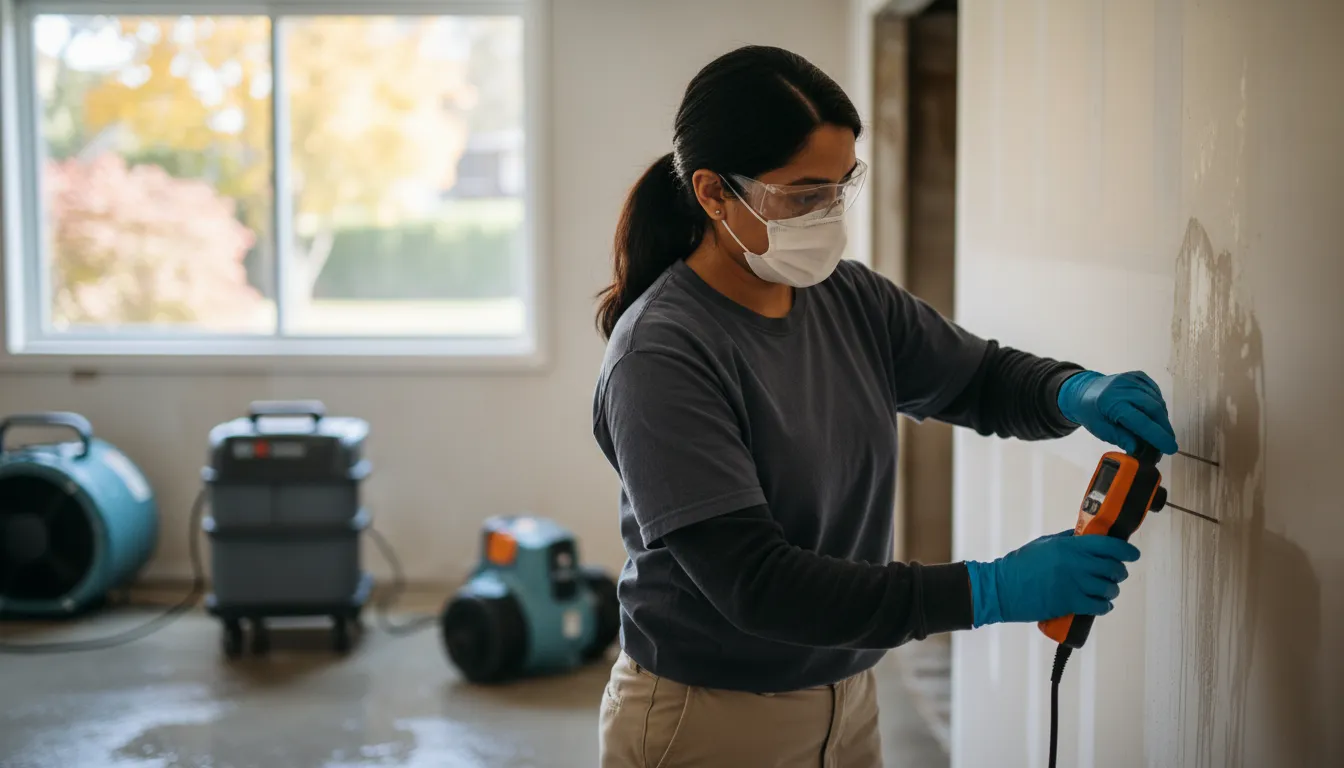
The difference between 'dry to the touch' and structurally dry
This is the single most common corner cut in water damage restoration. Carpet can feel dry within a day of equipment running, while the subfloor beneath it is still holding significant moisture. Drywall can look and feel normal on the surface while the stud cavity behind it stays wet for another week. Structural drying means confirming the framing, subfloor, and wall cavities themselves have returned to a safe moisture range — not just the surface.
We log moisture readings daily, not once
Drying isn't linear — some materials release moisture quickly, others slowly. Daily logs tell us when equipment can actually come out, instead of guessing based on a fixed number of days.
Equipment placement follows the readings
A dehumidifier and air mover count that's based on room square footage alone often over- or under-equips a space. We size equipment to the actual moisture load.
Older GTA housing stock holds moisture longer
Plaster walls and older subfloor materials common in pre-1980s Mississauga homes release moisture more slowly than modern drywall and OSB, which changes our drying timeline.
Winter drying works differently than summer drying
Cold, cold-soaked materials and lower ambient humidity change how dehumidifiers perform — we adjust equipment and timeline expectations for the season.
The job that's called 'done' on a fixed schedule
Some crews run equipment for a preset number of days — three, say — regardless of what the material is actually doing, then pull equipment and call it dry. If the drywall or subfloor hasn't hit a safe moisture reading by then, that's not a finished job, it's a scheduled one. And a structure that isn't actually dry is exactly how mould problems start weeks after the crew has already left.
Our standard: dry means verified, not scheduled
We take moisture readings before removing any equipment, and we keep the dehumidifiers and air movers running until those readings confirm the structure is within a safe range — whether that takes three days or seven. You get the daily log, so you can see the numbers trending down yourself, not just take our word for it.
Our structural drying process
Verification-based, not calendar-based.
- 1
Baseline moisture readings
We establish starting moisture levels in affected framing, subfloor, and walls.
- 2
Equipment sizing and placement
Dehumidifiers and air movers are placed according to the actual moisture load, not a flat per-room count.
- 3
Daily monitoring
Readings are logged each day to track progress and adjust equipment as needed.
- 4
Verification before removal
Equipment stays until readings confirm a safe moisture range — not until a preset day count is reached.
Why our drying standard is different
This is the phase where 'looks dry' and 'is dry' diverge — we only report the second one.
Daily moisture logging
You see the numbers trend down in writing, not just take our word for it.
Licensed & insured
Technicians trained in psychrometric drying principles.
Responsive scheduling
Equipment placed quickly once mitigation identifies the affected areas.
Verified before sign-off
No job is called complete without a final moisture reading to support it.
Adjusted for GTA building materials
Older plaster and newer drywall assemblies are treated differently.
Right-sized equipment
We don't fill a room with dehumidifiers it doesn't need.
Structural drying questions
How long does structural drying usually take?
It depends on the material, the extent of moisture, and the season — anywhere from two to seven or more days. We give you a realistic estimate based on daily readings, not a fixed number quoted before we've measured anything.
Can you tell if drying is working without opening the walls?
Yes — moisture meters can read through drywall to measure the cavity behind it, which is how we track progress without unnecessary demolition.
Why does my basement need more equipment than my upstairs bedroom did?
Equipment count follows the moisture load and airflow needs of the space, not room size alone. Basements often need more dehumidification capacity due to concrete's slower drying rate and typically lower ambient temperature.
What happens if my walls test dry within the wall cavity but the surface still feels damp?
That can be residual surface humidity rather than structural moisture — we'll explain what the reading actually indicates rather than leaving equipment running unnecessarily.
Do you provide documentation of the drying process for insurance?
Yes, we provide daily moisture logs and equipment placement records, which insurers typically want to see to support the claim.
Want drying that's verified, not just scheduled?
Email us and we'll explain exactly how we'll track your home's moisture levels day by day.
Email Us for a Free EstimateWeather drives water-damage risk — email us if you find water.
Fall water-damage conditions in Mississauga, ON
Fall rain around Mississauga, ON tests gutters, sump pumps, and foundations; catching leaks and seepage early prevents the slow water damage and mold that surface over winter.
Proudly Serving Mississauga, ON
Local, on-time service throughout Mississauga and the surrounding area.